
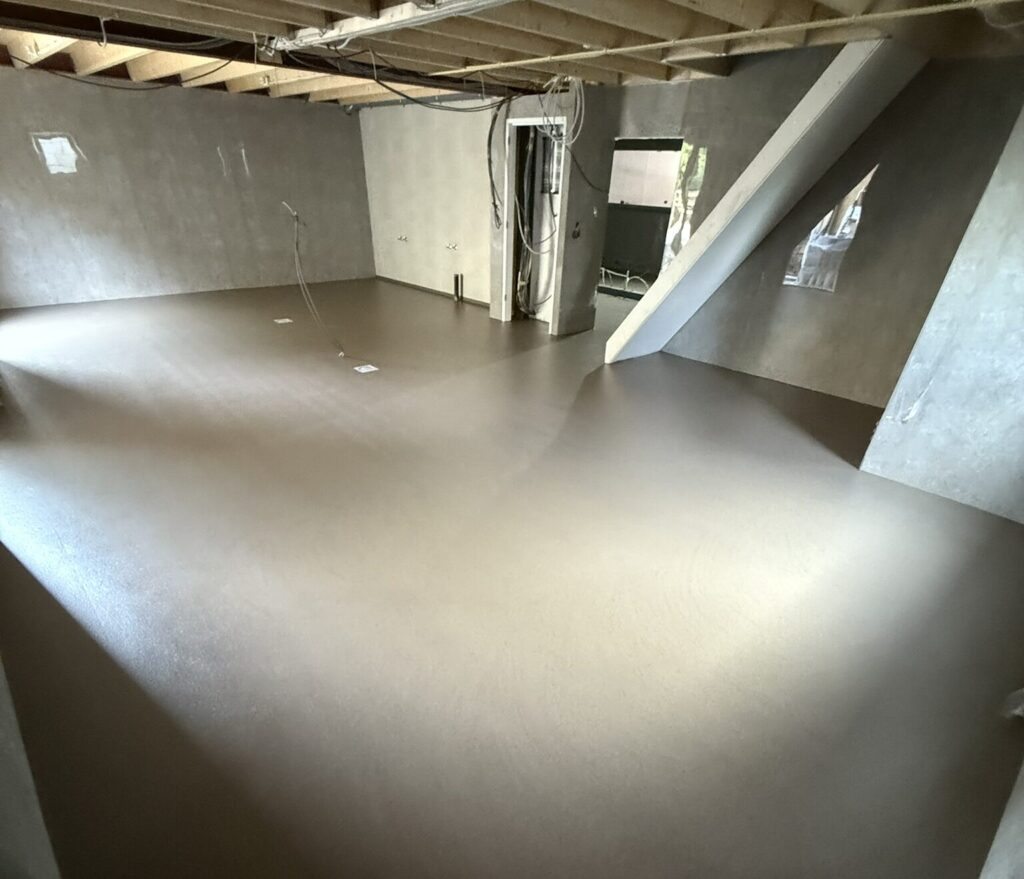
Industrial floors form the basis of many commercial spaces. Think of workshops, warehouses, production halls, garages, technical areas and other environments where intensive work is done every day. In such areas, a floor has to endure a lot. Heavy machinery, forklift trucks, chemical load, moisture, oil, dirt and continuous walking or driving traffic require a floor that can do more than just look sleek.
A good company floor not only ensures a neat appearance, but also contributes to safety, hygiene, efficiency and continuity. When a floor is not suitable for the use of the space, cracks, wear, liquid damage or slippery spots can occur. This may seem like a minor problem, but in practice it can lead to downtime, unsafe situations or higher maintenance costs.
In this article, you will read what industrial flooring is, what types there are and why it is important as a business to choose a flooring solution that suits the load on your space.
What are industrial floors?
Industrial floors are floors installed specifically for intensive business and industrial use. Whereas a standard floor is mainly aimed at appearance or normal daily use, an industrial floor has to withstand heavy loads, wear and often liquids or chemicals.
You see industrial floors in manufacturing companies, workshops, warehouses, logistics centres, garages, showrooms and technical premises, among others. Depending on the application, you can choose, for example, a epoxy floor, PMMA floor, trowel floor or cast floor. Which floor is most suitable depends on the use of the room, the desired look and the degree of stress.
Why a good industrial floor is important
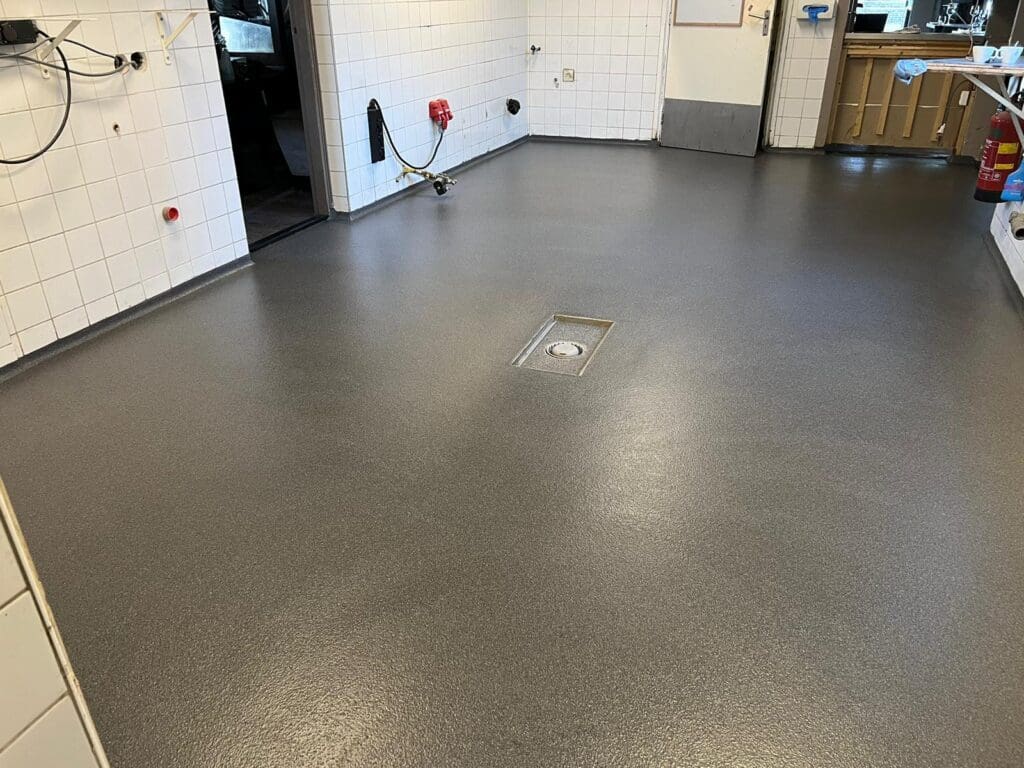
A floor is not a detail in many companies, but an important part of the work process. Industrial floors must be safe, strong and easy to maintain. If a floor becomes damaged, slippery or allows liquids to penetrate, it can directly affect daily operations.
A damaged floor can create dangerous situations, difficult-to-clean surfaces and extra maintenance. In some sectors, liquid-proofing, hygiene and health and safety requirements also play an important role. In such cases, it is important that the floor not only works practically, but also meets the requirements of the premises. Want to know more about preventing damage caused by liquids? Then also read the article on liquid-tight floors.
Different types of industrial floors
There are different types of industrial flooring, each with its own properties. An epoxy floor is often chosen for its high wear resistance and strong finish. This floor is suitable for areas where a lot of driving, working or loading takes place. An epoxy floor is seamless, tight and able to withstand intensive use.
A PMMA floor is particularly interesting when speed is important. This floor hardens quickly, often allowing the room to be used again sooner. This can be particularly useful in companies where downtime has to be kept to a minimum. A PMMA floor is therefore suitable for situations where a short turnaround time is important.
A trowel floor is very strong and is often used in areas where the floor is subjected to extremely heavy loads. Think of production environments, workshops or areas where there is a lot of moisture or dirt. A trowel floor can also be a durable choice when functionality and load-bearing capacity are paramount.
Choosing a floor based on use and load
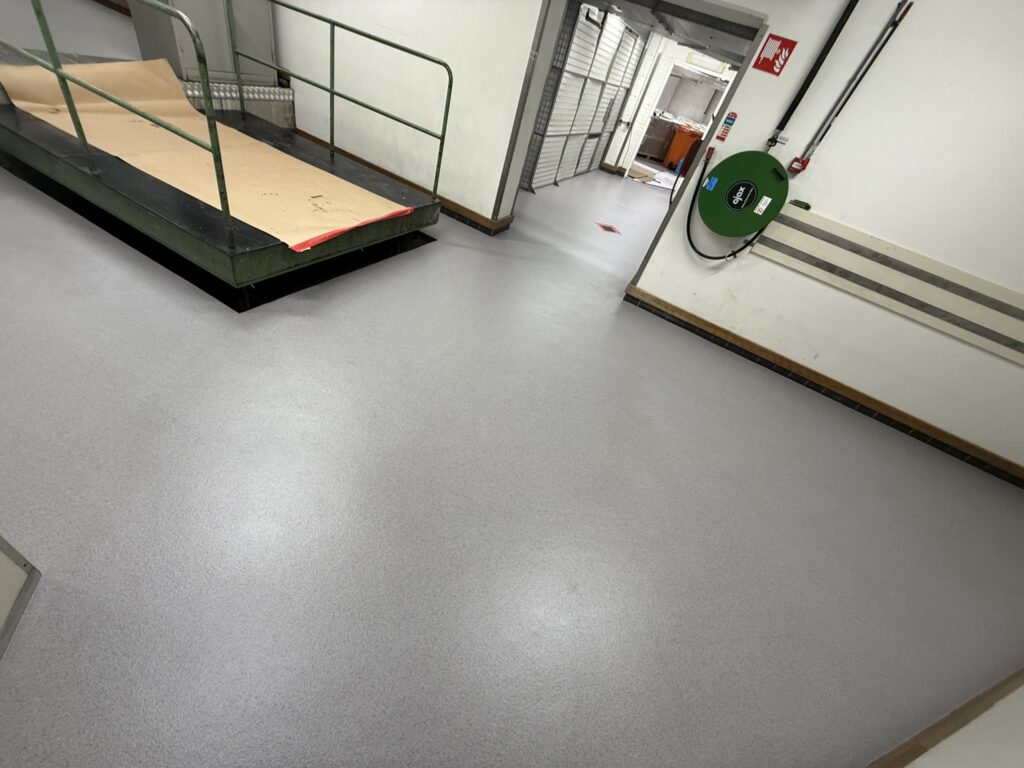
Not every commercial space requires the same solution. Industrial floors should therefore always be chosen based on the actual use of the space. Will forklifts be driven? Are liquids present? Is hygiene important? Does the floor have to be applied quickly? Or does appearance also play a major role?
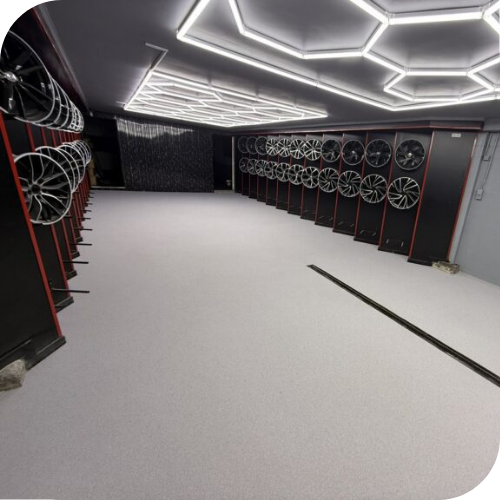
For a warehouse, for example, wear resistance is often more important than appearance. In a showroom or commercial premises, on the other hand, professional presentation plays a bigger role. In that case, a sleek cast floor can be a good solution. If you want to know more about floors where appearance is important, the article on a showroom floor to this well.
Avoid downtime through timely maintenance or repair
A floor that is damaged is often dealt with only when the problem is already visible or bothersome. Yet this is not always wise. Industrial floors can develop cracks, holes or scuffs due to heavy use. If this damage is not addressed in time, the problem can grow and eventually cause downtime.
For companies, downtime is often costly. Work has to be temporarily interrupted, rooms cannot be used or machinery has to be moved. By having damage assessed and repaired in time, you can avoid bigger problems. Read also the article Concrete floor repair.
Durability and quality start with the right construction
The quality of industrial floors is not only determined by the visible top layer. It is precisely the preparation, primer, layer build-up and choice of material that are important for the final result. A floor must adhere well, be suitable for the substrate and be tailored to the load of the room.
At Malema Coatings, therefore, the entire situation is considered. Together, the existing substrate, the use of the space and the desired properties determine which flooring system is the best fit. Choosing reliable suppliers also plays a role in this. Read more in the article Working with Quartzline as a supplier.
Have industrial flooring installed by Malema Coatings
Industrial floors require customisation. Every business space is different and every sector has different flooring requirements. That is why it is important not to just opt for a standard solution, but for a floor that suits the load, safety and appearance of your company.
Malema Coatings advises companies on the right flooring solution, looking at usage, substrate, planning and durability. Whether it is a hard-wearing epoxy floor, a quick-curing PMMA floor, a strong trowel floor or a sleek cast floor: with the right floor, you are investing in a safe, professional and future-proof business space.