
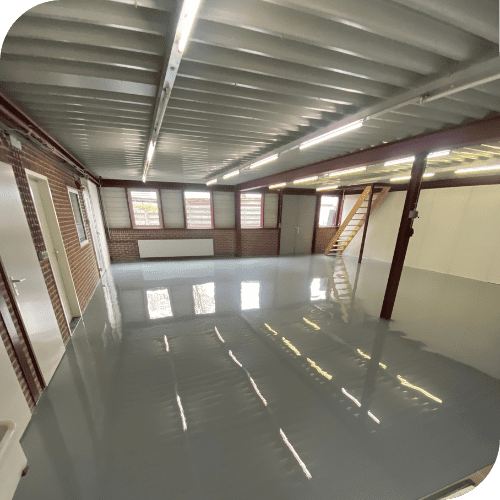
Vrees voor blijvende schade aan uw muren door opspattende chemicaliën of olie? Epoxy wandcoating creëert een ondoordringbaar schild dat uw muren net zo sterk maakt als uw vloer. Wij laten zien hoe u met deze coating uw volledige werkruimte vloeistofdicht en chemisch resistent maakt.
Waarom wandcoating essentieel is voor een vloeistofdichte constructie
In veel industriële ruimtes zijn de vloeren uitstekend beschermd, maar worden de wanden vergeten. Beton, kalkzandsteen en stucwerk zijn van nature poreuze materialen. Dit betekent dat zij vloeistoffen opzuigen als een spons. Wanneer agressieve stoffen of oliën tegen de muur spatten, trekken deze diep in de constructie.
Met de epoxy wall coating van Malema Coatings voorkomt u dit probleem volledig. De coating vormt een harde en gladde laag die de muur hermetisch afsluit. Vloeistoffen blijven op het oppervlak liggen en kunnen niet doordringen tot de kern van de muur. Dit beschermt de structurele integriteit van uw bedrijfspand op de lange termijn.
Een ondoordringbare barrière tegen chemicaliën
Epoxy staat bekend om zijn uitstekende chemische resistentie. In een omgeving waar met gevaarlijke stoffen wordt gewerkt, is deze bescherming cruciaal. Voor ruimtes waar hygiëne en snelle droogtijden nóg belangrijker zijn, zoals in de voedingsmiddelenindustrie, wordt ook vaak gekozen voor een acrylic wall coating als alternatief.
Een vloeistofdichte wand is net zo belangrijk als een veilige vloer voor het behoud van uw werkruimte. Omdat de coating naadloos is, zijn er geen zwakke plekken zoals voegen waar vloeistoffen doorheen kunnen sijpelen. U creëert hiermee een opvangbak effect in uw hele ruimte. Dit effect is pas echt compleet wanneer de vloer ook vloeistofdicht is, bijvoorbeeld door een Pucem vloersysteem.
Toepassing en veiligheid in uw werkruimte
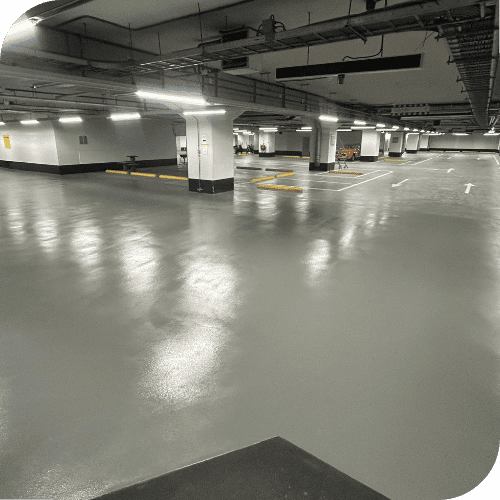
De keuze voor een wandcoating is een duurzame investering in de veiligheid van uw bedrijfsvoering. Het aanbrengen van deze laag zorgt ervoor dat uw muren bestand zijn tegen de zwaarste omstandigheden. Bovendien ziet een gecoate wand er direct strak en professioneel uit. Voor een naadloze en hygiënische overgang van vloer naar wand kunnen we tevens plastic skirting boards installeren.
Geschikte ondergronden voor epoxy wandcoating
Een groot voordeel van epoxy wandcoating is de veelzijdigheid. Het systeem kan op bijna elke stabiele en droge ondergrond worden aangebracht. Voordat we de coating aanbrengen, zorgen we voor een grondige voorbehandeling zodat de hechting optimaal is.
- Direct aan te brengen op betonnen wanden en prefab elementen.
- Geschikt voor muren van baksteen of kalkzandsteen.
- Kan worden aangebracht over bestaand stucwerk of cementmortel.
WHICH LIQUID-TIGHT FLOORS SUIT YOUR SITUATION?
Not every floor is the same. Which liquid-proof solution is most suitable depends on the load, the substrate, the desired appearance and the sector you work in.
Epoxy flooring
Epoxy flooring is a strong, seamless industrial floor that is well suited to areas where heavy loads, hygiene and chemical resistance are important. Epoxy floors are liquid-proof, easy to clean and can carry heavy weight effortlessly.
A thinner protective layer over an existing floor, so epoxy is ideal for large(er) areas and often a budget-friendly solution unlike PMMA.
Advantages:
✔ Twice as strong as concrete
✔ Seamless
✔ Easy to clean
✔ Anti-allergenic
✔ Enormously strong
✔ Light impact and abrasion resistant
Resistant to chemicals and acids
✔ Can be supplied in many colours
✔ Anti-slip possible
✔ Liquid-proof
✔ Can carry heavy weight effortlessly
PMMA floor
A PMMA floor is a strong and hard-wearing floor coating with a particularly great advantage: the floor is fully cured and ready for use again within about two hours. That makes this system ideal for companies where downtime costs money immediately.
PMMA floors are liquid-proof, hygienic, chemical-resistant and can be fitted with anti-slip. They are also flexible, reducing the risk of cracking.
Advantages:
✔ Drying time of only 2 hours
✔ Seamless
✔ Hygienic
✔ Easy to clean
✔ Liquid-proof
✔ Dust-free
✔ Wear-resistant
✔ Flexible so it does not tear
✔ Anti-slip possible
✔ Heat-resistant coating possible
✔ Suitable for cold areas
✔ Suitable for indoor and outdoor use
What should good liquid-proof floors meet?
An impermeable floor should do more than just hold back liquids. In practice, these are the most important properties:
- Seamless finishing
- Resistant to moisture and chemicals
- Wear-resistant top layer
- Easy to clean
- Anti-slip possible
- Suitable for the load of your working environment
That is why it is important to look not only at the price or appearance, but also at the application. A floor in a warehouse simply requires something different from a floor in a butcher's shop or car workshop.
Verbetering van de veiligheid in opslagruimtes
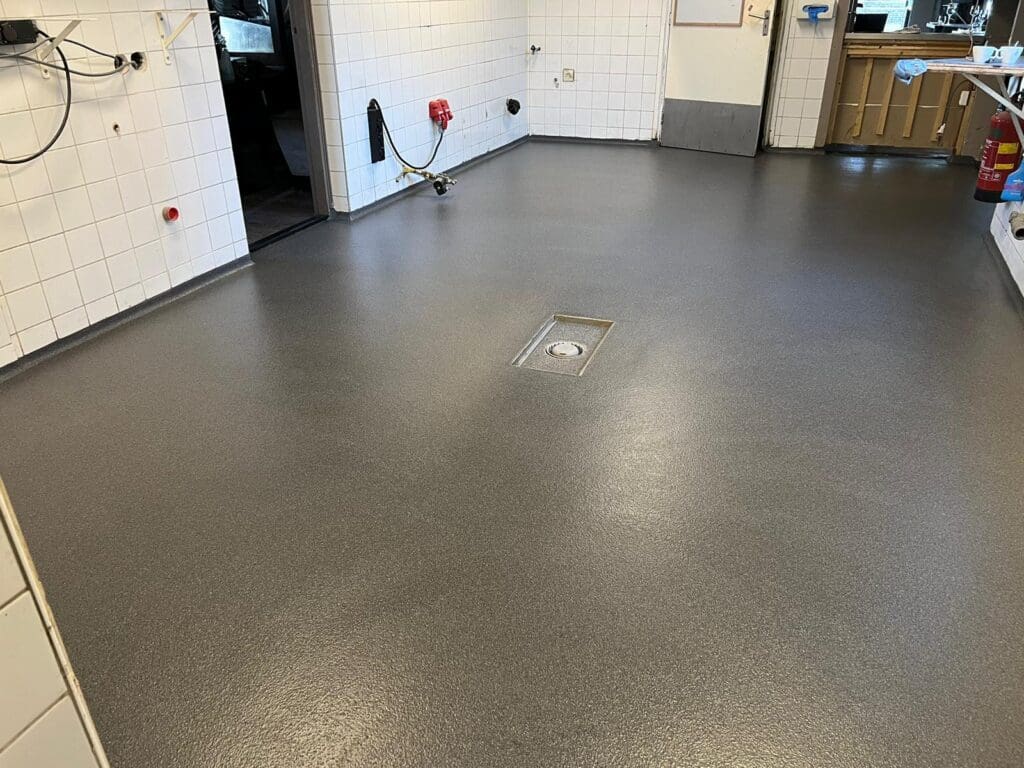
In chemische opslagruimtes of technische ruimtes is het essentieel dat lekkages direct zichtbaar zijn. Op een onbehandelde muur trekken vloeistoffen in het beton, waardoor u de ernst van een lek niet kunt inschatten. Met een gladde wandcoating ziet u direct waar er iets gemorst is.
Het opruimen van chemische stoffen wordt hierdoor ook een stuk veiliger. U kunt de wanden eenvoudig afnemen met geschikte absorptiemiddelen of reinigers zonder dat er resten achterblijven in de poriën. Dit verkleint het risico op schadelijke dampen of onzichtbare vervuiling in de lucht van uw werkruimte.
Hygiëne en duurzame afwerking
Naast de chemische bescherming is de coating ook zeer slagvast en krasvast. In een drukke werkplaats waar gereedschappen of materialen wel eens tegen de muur stoten, blijft de afwerking intact. De wand is bovendien zeer eenvoudig schoon te houden door het ontbreken van structuur waar stof aan kan hechten.
- De coating is bestand tegen hogedrukreiniging met warm water.
- Bacteriën en schimmels krijgen geen kans om zich te nestelen.
- Het oppervlak vergeelt niet en blijft jarenlang representatief.
Bent u op zoek naar een manier om uw muren de beste bescherming te bieden? Wij komen graag bij u langs om de staat van uw wanden te beoordelen en een technisch advies uit te brengen. Neem contact met ons op voor een vrijblijvende offerte voor uw project.