
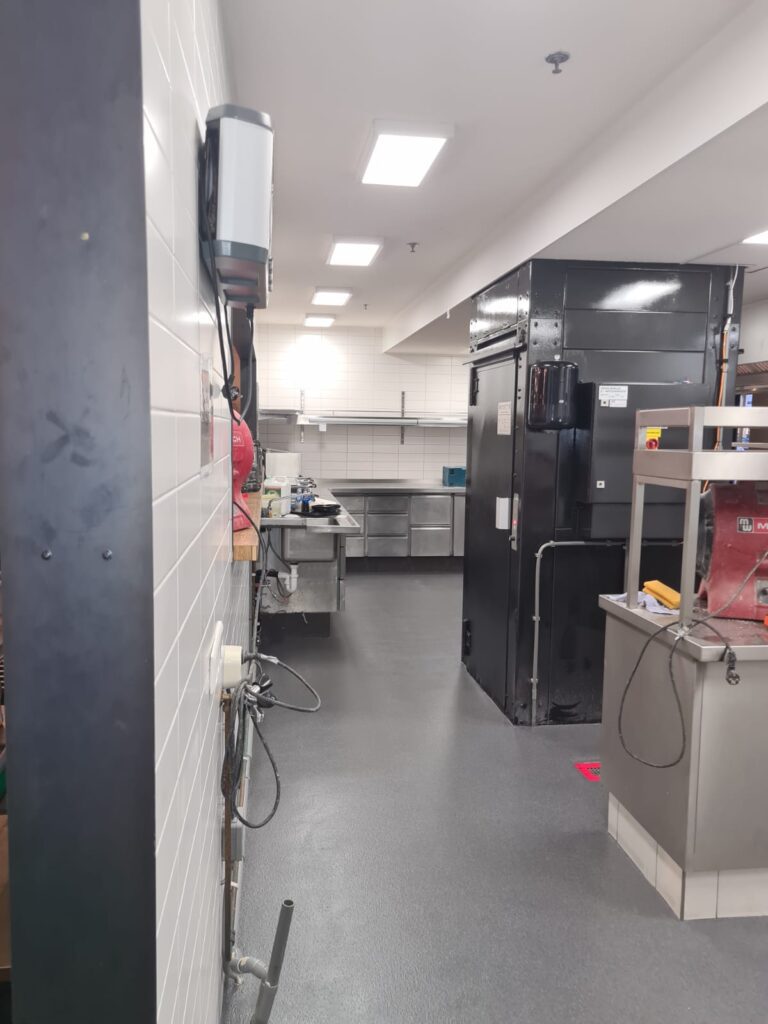
Hospitality floors have to put up with a lot on a daily basis. In restaurants, cafés, hotels, recreation rooms, professional kitchens and areas within the food industry, people work, walk, clean and spill intensively. Therefore, the floor not only has to look neat, but above all it has to be safe, hygienic and practical.
The hospitality industry is all about speed, quality and reliability. Employees must be able to work safely, rooms must be easy to keep clean and the floor must be able to withstand moisture, dirt, grease and intensive use. The wrong floor choice can lead to slipperiness, broken tiles, worn joints, dirt build-up or unhygienic situations.
That is why it is important to arrange catering floors properly. Not only for the appearance of the space, but also for hygiene, safety, inspections and day-to-day operations.
Why good catering floors are important
In the hospitality industry, floors are subjected to heavy loads every day. People walk, work, clean, spill and often drive carts, equipment or stock. Catering floors must therefore be able to withstand conditions that you are far less likely to encounter in a normal room.
The right floor is especially important in wet rooms, professional kitchens and food processing environments. Moisture, grease and dirt can cause slipperiness or hygiene problems with the wrong floor finish. Think of broken ceramic tiles, worn joints or PVC tiles that become loose over time. Underneath such floors, dirt can accumulate, with all its consequences.
A good floor helps to reduce risks. The room stays cleaner better, employees work safer and the floor remains suitable for intensive daily use for longer.
What should catering floors comply with?
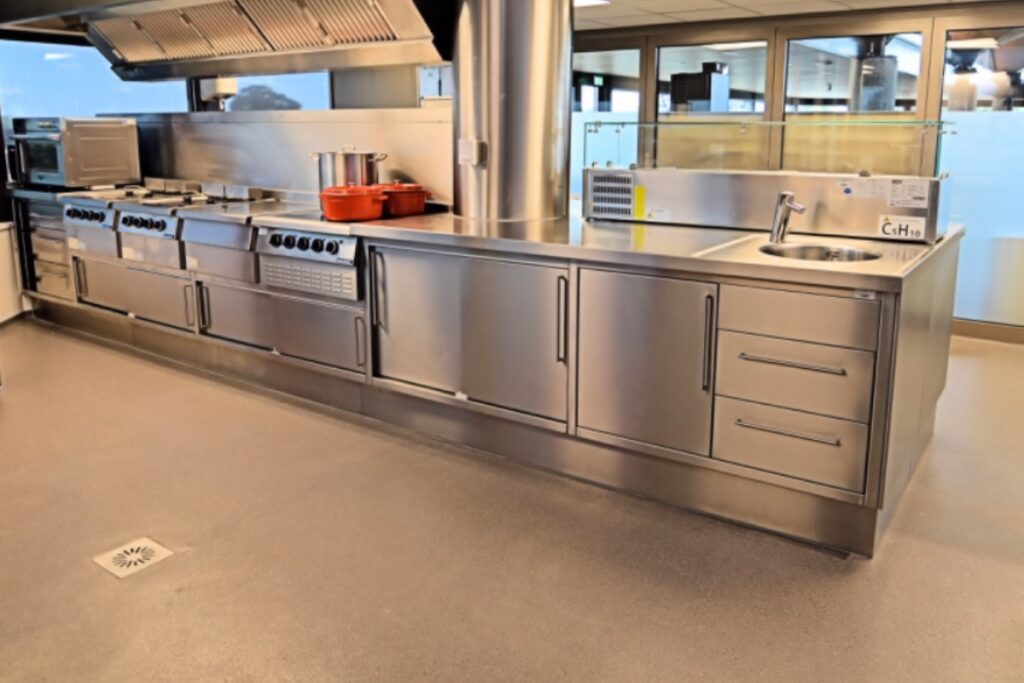
Hospitality floors should match the function of the space. A restaurant area requires a different finish than a sink, preparation area or professional kitchen. Nevertheless, there are some features that are important in many hospitality spaces.
A suitable floor for the hospitality industry is: liquid-proof, seamless, wear-resistant, hygienic, easy to clean, safe and grippy, suitable for intensive use and resistant to moisture, dirt and grease.
In professional kitchens and the food industry, HACCP guidelines also play an important role. A floor should then not only be practical, but also contribute to a safe and hygienic working environment. Want to know more about preventing damage caused by humidity and liquids? Then also read the article on liquid-tight floors.
Floor coating for catering, leisure and food industry
Floor coating is a strong solution for hospitality, leisure and food industry. Hospitality floors with a good coating finish help make spaces hygienic, safe and easy to maintain. Especially in wet areas, a seamless coating prevents moisture, dirt, mould and bacteria from accumulating easily.
A coating floor forms a protective layer over the substrate. This creates a surface that is easy to keep clean and suitable for daily intensive use. This is important in areas where hygiene and speed come together, such as kitchens, rinse rooms, storage areas and preparation areas.
For business owners in the hospitality and leisure sector, a coating floor therefore offers not only practical convenience but also security. The floor is more resistant to the conditions of daily use and contributes to a professional working environment.
HACCP floors for professional kitchens
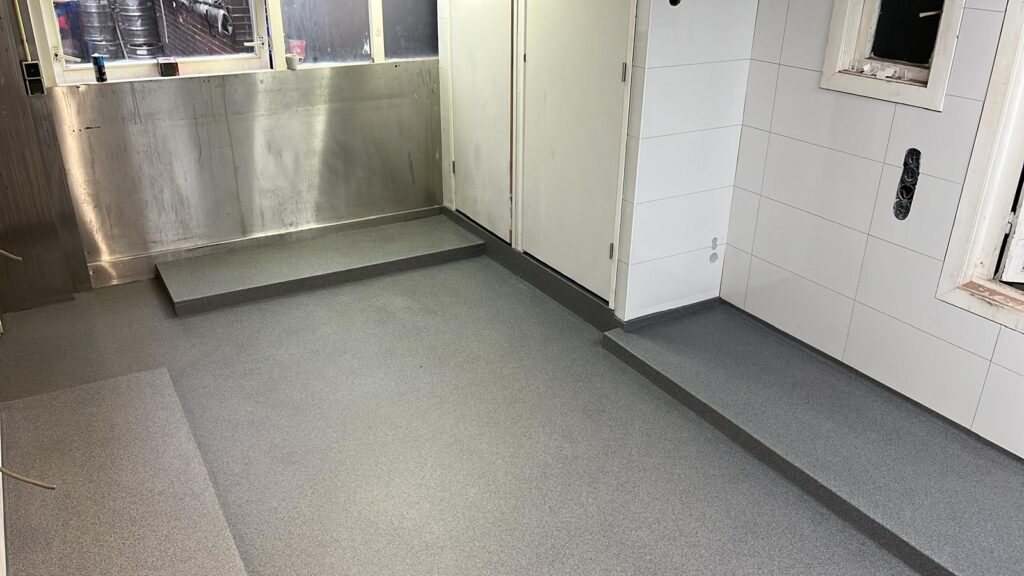
Professional kitchens have high hygiene and safety requirements. Hospitality floors have to be resistant to moisture, grease, cleaning agents and intensive use. In practice, a standard tiled floor is far from always the best solution, especially when joints become worn or tiles are damaged.
A PMMA-based HACCP floor then offers a strong and hygienic solution. These floors are liquid-proof, seamless and easy to clean. This makes them suitable for catering kitchens, food processing and other areas where hygiene is key.
A major advantage is that dirt cannot accumulate as easily. Without joints or loose parts, the floor remains easier to clean and the risk of unhygienic situations decreases. This is not only pleasant for daily maintenance, but also important during checks and inspections.
PMMA floor: quickly realised and quickly reusable
A PMMA floor is particularly interesting for catering establishments where closing time must be kept to a minimum. PMMA-based catering floors can be applied quickly and are often ready for use after only a short time.
At Malema Coatings, laying the floor and any skirting can usually be achieved quickly. In many cases, execution is possible within one working day and the floor can be used after about two hours. This makes PMMA a strong choice for business owners who want to renew their floors without prolonged downtime.
A PMMA floor is also liquid-proof, hard-wearing, seamless and easy to clean. As such, this system fits well with the requirements of professional kitchens, catering and food processing areas.
Grip, safety and daily ease of use
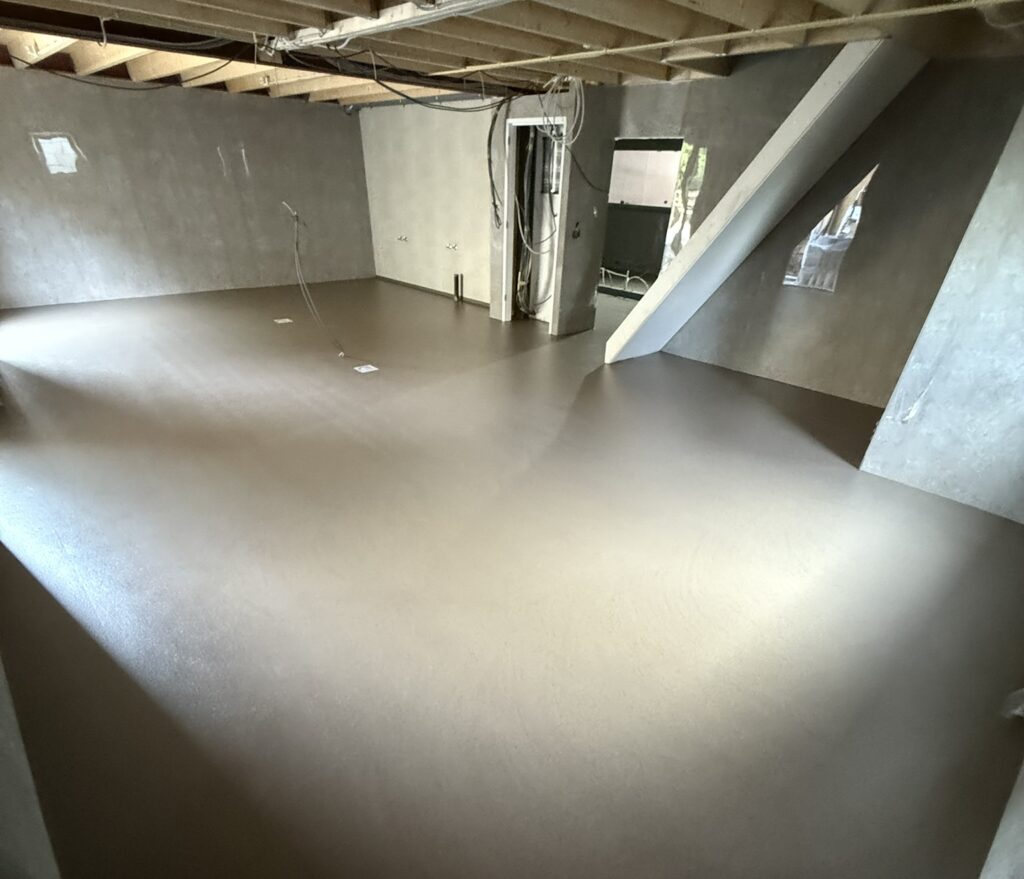
Safety is a major concern in the hospitality industry. Moisture, grease or cleaning agents can quickly make a floor slippery. Catering floors should therefore not only be hygienic, but also provide sufficient grip for employees who work at high speed every day.
A good floor coating can be made with a non-slip finish. This reduces the risk of slipping and keeps the floor suitable for intensive use. This is especially important in kitchens, washrooms and wet areas.
Besides safety, ease of use plays a major role. A floor that is easy to clean saves time and helps keep the space tidy. This makes daily work more efficient and creates a better working environment.
Seamless finishing with skirting boards
A good finish does not stop with the floor itself. Hospitality floors can also be combined with matching skirting boards, so that floor and wall fit together better. This ensures a hygienic transition and makes cleaning easier.
This is especially important in professional kitchens and wet areas. When dirt and moisture accumulate in corners or seams, cleaning becomes more difficult. Opting for a seamless floor finish with skirting boards creates a practical solution that better suits the requirements of the hospitality industry.
Again, the right execution is important. A floor should not only be beautifully fitted, but above all it should remain functional in everyday use.
Prevent damage, criticism and unhygienic situations
A damaged floor can quickly cause problems in the hospitality industry. Broken tiles, worn joints or loose parts make cleaning more difficult and increase the risk of dirt accumulation. Catering floors that do not function properly can therefore lead to unhygienic situations or criticism during inspections.
Choosing an impermeable and seamless floor finish in good time will prevent many problems. The floor remains better protected against moisture and dirt, is easier to maintain and contributes to a safe working environment.
Is the existing floor already damaged? If so, it is wise to see in time what solution is possible. Sometimes repair or a new finish can prevent many problems. Also read concrete floor repair and opt for a sustainable solution.
Have catering floors installed by Malema Coatings
Hospitality flooring requires customisation. A restaurant, café, professional kitchen, washroom or recreational environment all place different demands on the floor. Therefore, Malema Coatings considers the use of the space, the existing substrate, hygiene requirements and the desired schedule.
With a floor coating for the hospitality industry, you choose a solution that is liquid-proof, hard-wearing, seamless and easy to clean. Whether it is an HACCP floor for a professional kitchen or a practical flooring solution for the hospitality and leisure sector, Malema Coatings will provide you with a floor that suits the space and is ready for daily intensive use.