
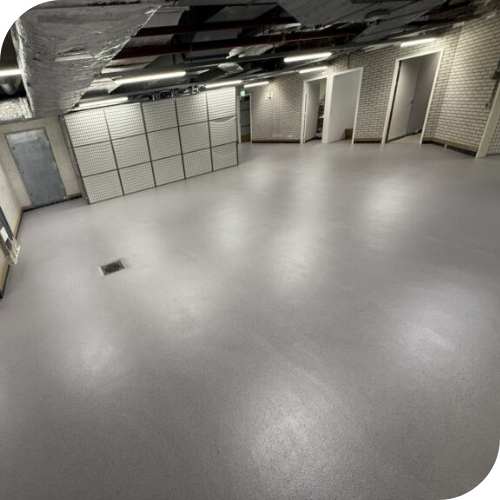
Do you suffer from cracks or holes in your current work floor due to heavy mechanical loads? A trowel floor is the rock-solid solution that bears even the heaviest machinery and carts effortlessly. In this blog, we explain why this floor is indestructible for your premises.
Why a trowel floor is stronger than a standard concrete floor
A standard concrete floor looks very strong at first glance. Yet over time, concrete often suffers from wear and tear or small cracks. A trowel floor is constructed differently. This floor consists of a mixture of fine quartz grains and a strong synthetic resin.
This combination creates an extremely dense surface. As a result, the floor can withstand great pressure much better than ordinary concrete. The material absorbs the impact of heavy objects more easily. As a result, the floor lasts much longer in a busy working environment.
Resistant to heavy mechanical loads
Forklifts and heavy trolleys drive around in many industrial halls on a daily basis. This requires a floor that does not get damaged easily. The trowel floor is specially designed for such heavy conditions.
A good work floor should last for years without creating gaps due to daily use. Before laying such a floor, it is often advisable to check the floor to be levelled for optimum results.
The granules in the floor provide enormous stability. Even when constantly shifting heavy pallets, the surface remains sleek and whole. This will save you a lot of costs for repairs to your premises in the long run.
Safety and protection in the workplace
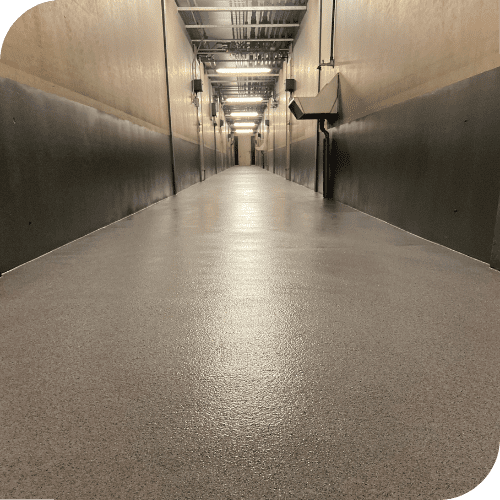
A broken floor creates dangerous situations for your staff. You should always avoid tripping hazards due to holes or cracks. A trowel floor from Malema Coatings is laid completely seamless.
How this floor prevents unsafe situations
Because the floor has no seams, there can be no loose pieces. This makes driving carts a lot safer and more stable. We can also finish the floor with a special coating for extra grip. For walls that also need to withstand rough handling, we often recommend a epoxy wall coating as a supplement.
- The surface is non-slip enough to prevent slipping.
- The flat floor reduces vibration in transport vehicles.
- There are no deep holes in which dirt or bacteria can accumulate.
WHICH LIQUID-TIGHT FLOORS SUIT YOUR SITUATION?
Not every floor is the same. Which liquid-proof solution is most suitable depends on the load, the substrate, the desired appearance and the sector you work in.
Epoxy flooring
Epoxy flooring is a strong, seamless industrial floor that is well suited to areas where heavy loads, hygiene and chemical resistance are important. Epoxy floors are liquid-proof, easy to clean and can carry heavy weight effortlessly.
A thinner protective layer over an existing floor, so epoxy is ideal for large(er) areas and often a budget-friendly solution unlike PMMA.
Advantages:
✔ Twice as strong as concrete
✔ Seamless
✔ Easy to clean
✔ Anti-allergenic
✔ Enormously strong
✔ Light impact and abrasion resistant
Resistant to chemicals and acids
✔ Can be supplied in many colours
✔ Anti-slip possible
✔ Liquid-proof
✔ Can carry heavy weight effortlessly
PMMA floor
A PMMA floor is a strong and hard-wearing floor coating with a particularly great advantage: the floor is fully cured and ready for use again within about two hours. That makes this system ideal for companies where downtime costs money immediately.
PMMA floors are liquid-proof, hygienic, chemical-resistant and can be fitted with anti-slip. They are also flexible, reducing the risk of cracking.
Advantages:
✔ Drying time of only 2 hours
✔ Seamless
✔ Hygienic
✔ Easy to clean
✔ Liquid-proof
✔ Dust-free
✔ Wear-resistant
✔ Flexible so it does not tear
✔ Anti-slip possible
✔ Heat-resistant coating possible
✔ Suitable for cold areas
✔ Suitable for indoor and outdoor use
What should good liquid-proof floors meet?
An impermeable floor should do more than just hold back liquids. In practice, these are the most important properties:
- Seamless finishing
- Resistant to moisture and chemicals
- Wear-resistant top layer
- Easy to clean
- Anti-slip possible
- Suitable for the load of your working environment
That is why it is important to look not only at the price or appearance, but also at the application. A floor in a warehouse simply requires something different from a floor in a butcher's shop or car workshop.
Resistant to liquids and acids
Many industries work with liquids that can affect the floor. Think of oils in a garage or acids in the food industry. A standard floor often absorbs these substances, causing damage.
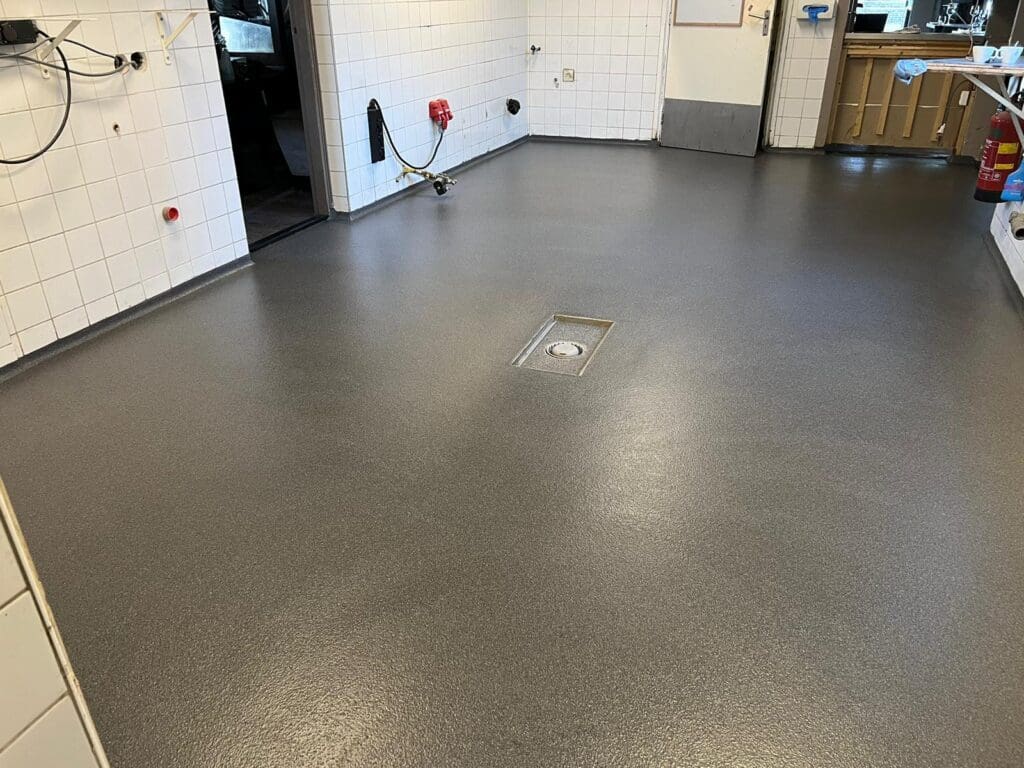
A trowel floor is liquid-proof and chemical-resistant. This means that corrosive substances cannot easily damage the floor. Are you looking for an alternative that is also highly hygienic and liquid-proof? Then a Pucem floor is often an excellent option. You can simply polish away spills without leaving stains in the deeper layers.
Durability and ease of maintenance
A floor that is easy to clean saves you time and money. Because trowel floors are so strong and dense, dirt hardly adheres to the surface. A quick polish is often enough to make the floor presentable again.
- You need less aggressive cleaning agents.
- The floor retains its colour and neat appearance for years.
- Maintenance costs remain low due to high wear resistance.
Want to know if a trowel floor is the right choice for your specific situation? We will be happy to visit you for personalised advice tailored to your needs. Feel free to contact us for a no-obligation quotation for your new company floor.