
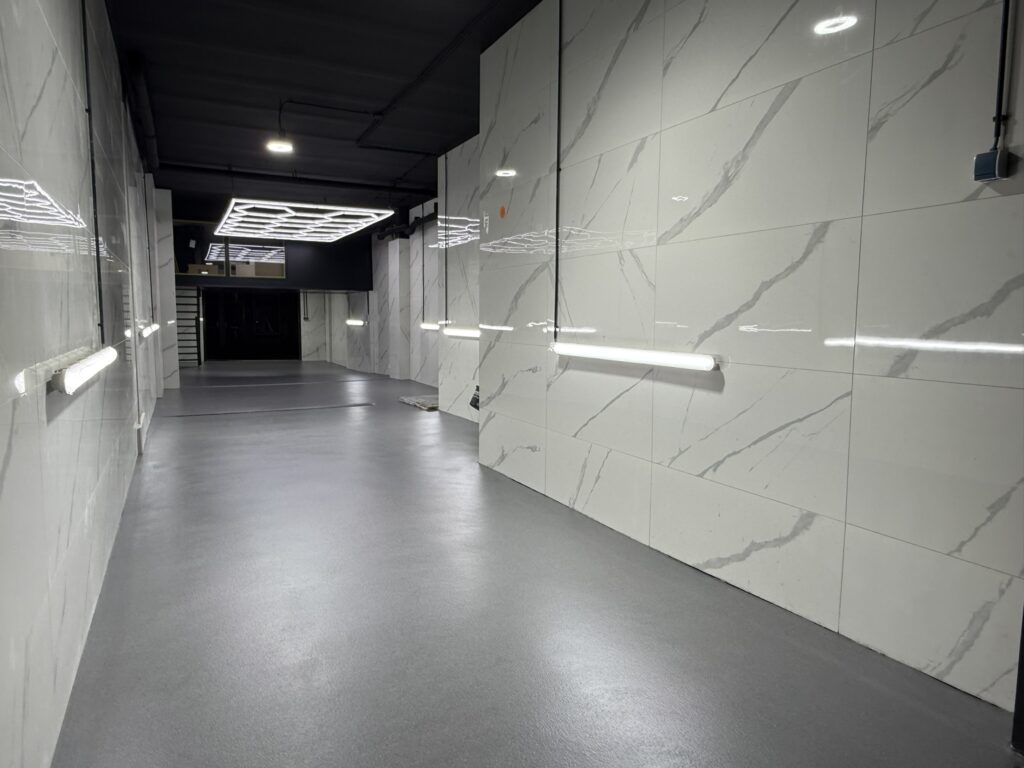
Liquid-proof floors are not a luxury but an absolute necessity in many sectors. In environments where people work with water, oil, greases, chemicals or other liquids on a daily basis, a floor has to be able to withstand more than just loads from foot traffic or machinery. A good floor protects the surface, prevents contamination and contributes to safety, hygiene and continuity within your company.
Malema Coatings specialises in durable plastic industrial floors and knows better than anyone how important a strong, liquid-proof base is.
In this article, you will read why liquid-proof floors are so important, in which sectors they are indispensable and which flooring system is best suited to your situation.
WHY LIQUID-TIGHT FLOORS ARE SO IMPORTANT
Advantages of liquid-tight floors
PROTECTION OF THE SUBFLOOR
HYGIENIC FINISH
LOW-MAINTENANCE
SAFER WORK
LONGER LIFETIME OF THE FLOOR
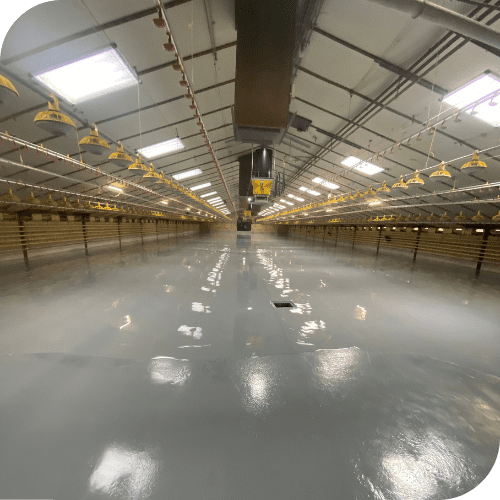
IN WHICH INDUSTRIES ARE LIQUID-TIGHT FLOORS INDISPENSABLE?
INDUSTRY AND LOGISTICS
AUTOMOTIVE
FOOD INDUSTRY AND CATERING
AGRICULTURE
WHICH LIQUID-TIGHT FLOORS SUIT YOUR SITUATION?
Not every floor is the same. Which liquid-proof solution is most suitable depends on the load, the substrate, the desired appearance and the sector you work in.
Epoxy flooring
Epoxy flooring is a strong, seamless industrial floor that is well suited to areas where heavy loads, hygiene and chemical resistance are important. Epoxy floors are liquid-proof, easy to clean and can carry heavy weight effortlessly.
A thinner protective layer over an existing floor, so epoxy is ideal for large(er) areas and often a budget-friendly solution unlike PMMA.
Advantages:
✔ Twice as strong as concrete
✔ Seamless
✔ Easy to clean
✔ Anti-allergenic
✔ Enormously strong
✔ Light impact and abrasion resistant
Resistant to chemicals and acids
✔ Can be supplied in many colours
✔ Anti-slip possible
✔ Liquid-proof
✔ Can carry heavy weight effortlessly
PMMA floor
A PMMA floor is a strong and hard-wearing floor coating with a particularly great advantage: the floor is fully cured and ready for use again within about two hours. That makes this system ideal for companies where downtime costs money immediately.
PMMA floors are liquid-proof, hygienic, chemical-resistant and can be fitted with anti-slip. They are also flexible, reducing the risk of cracking.
Advantages:
✔ Drying time of only 2 hours
✔ Seamless
✔ Hygienic
✔ Easy to clean
✔ Liquid-proof
✔ Dust-free
✔ Wear-resistant
✔ Flexible so it does not tear
✔ Anti-slip possible
✔ Heat-resistant coating possible
✔ Suitable for cold areas
✔ Suitable for indoor and outdoor use
What should good liquid-proof floors meet?
An impermeable floor should do more than just hold back liquids. In practice, these are the most important properties:
- Seamless finishing
- Resistant to moisture and chemicals
- Wear-resistant top layer
- Easy to clean
- Anti-slip possible
- Suitable for the load of your working environment
That is why it is important to look not only at the price or appearance, but also at the application. A floor in a warehouse simply requires something different from a floor in a butcher's shop or car workshop.
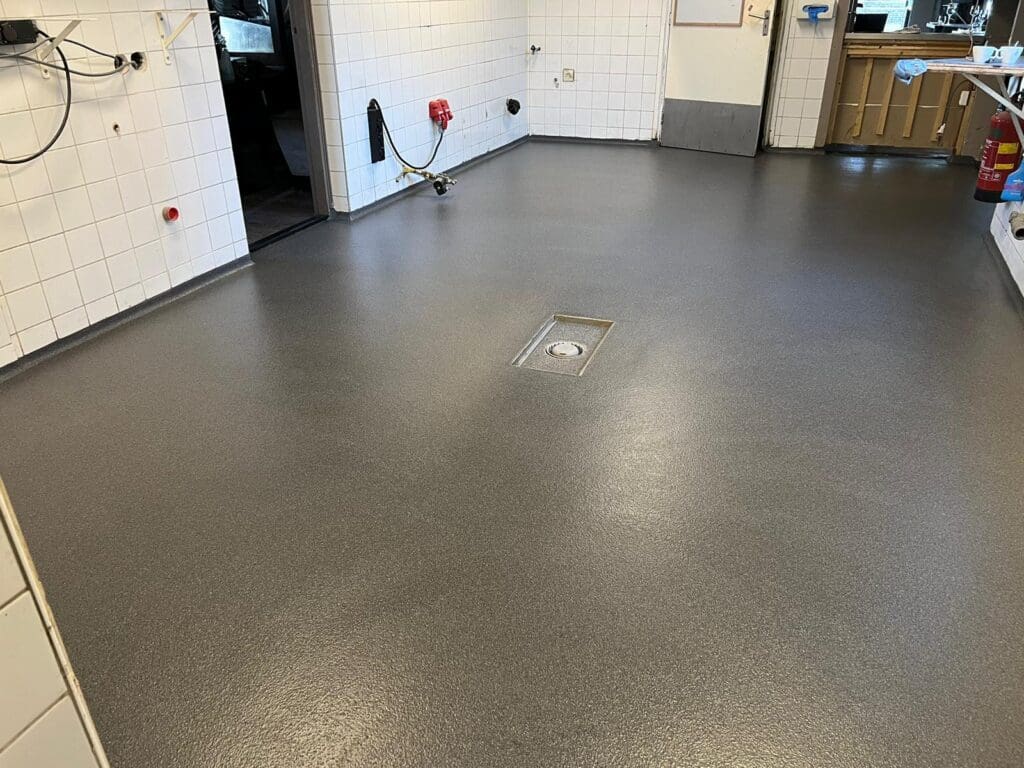
AVOID PROBLEMS AND CHOOSE CERTAINTY
A good liquid-proof floor prevents damage, increases safety and ensures a neat, professional appearance. Whether you operate in industry, hospitality, automotive or agriculture: a durable floor coating is a smart investment in the future of your business.
Malema Coatings combines specialist knowledge with strong flooring systems such as epoxy and PMMA. This ensures you have a floor that can withstand moisture, intensive use and daily loads.
Have liquid-tight floors installed?
Want to know which liquid-proof floor is best suited to your situation? Contact Malema Coatings for no-obligation advice or request a quote directly. We will help you get a floor that is safe, durable and ready for the future.